1-833-209-3704
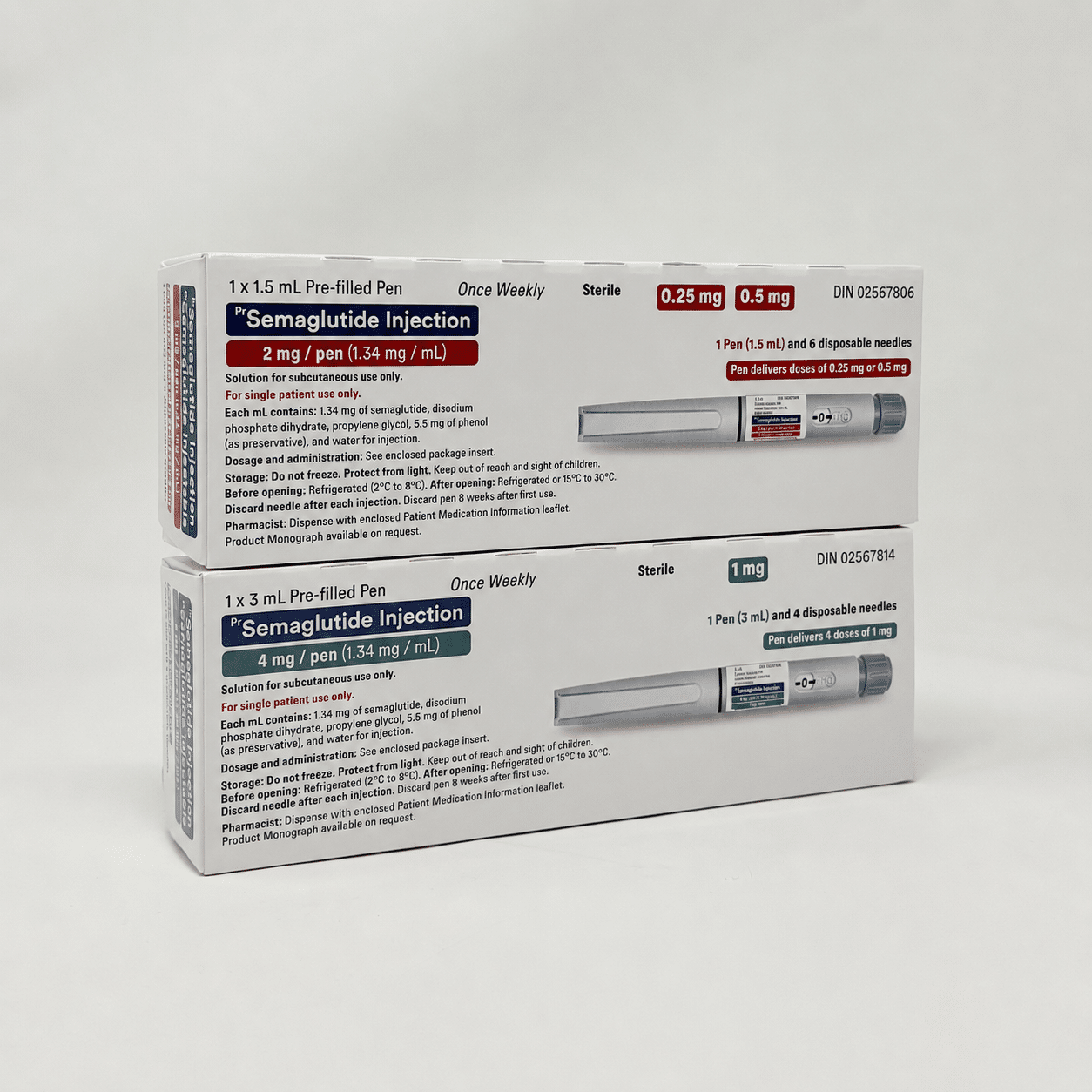
Semaglutide 2 mg and 4 mg Pen

Semaglutide 2 mg and 4 mg Pen 
Semaglutide
Product information
Semaglutide is a generic version of semaglutide used to help improve blood sugar control in adults with type 2 diabetes. It works by mimicking the GLP-1 hormone to help regulate insulin release, reduce appetite, and slow digestion. As a more affordable alternative to brand-name semaglutide products, it offers patients a cost-effective option for long-term diabetes management.
 In stock and ready to ship.
 RX Required
Product options
Generic Semaglutide Injection – Uses, Dosing, Side Effects, Pens, and Safety Information
Generic semaglutide injection is a once-weekly GLP-1 receptor agonist used in adults with type 2 diabetes to help improve blood sugar control. In Canada, generic semaglutide injection is now available from two manufacturers: Apotex and Dr. Reddy’s.
The Apotex product is marketed as APO-Semaglutide Injection and is supplied as a clear, colourless solution in pre-filled, multi-dose pens. Semaglutide is the active ingredient also found in the well-known brand-name GLP-1 medication Ozempic, but this page focuses on Canadian generic semaglutide options, dosing, safety, and access for U.S. patients.
What Generic Semaglutide Is Used For
APO-Semaglutide Injection is indicated for once-weekly treatment of adult patients with type 2 diabetes to improve glycemic control, along with diet and exercise.
It may be used:
- When metformin is not appropriate because of intolerance or contraindication
- With metformin when metformin plus diet and exercise are not enough
- With metformin and a sulfonylurea when additional blood sugar control is needed
- With metformin or a sulfonylurea plus an SGLT2 inhibitor
- With basal insulin and metformin when additional glycemic control is needed
Generic semaglutide injection is not a substitute for insulin and should not be used to treat type 1 diabetes or diabetic ketoacidosis.
Generic Semaglutide Options in Canada: Apotex and Dr. Reddy’s
There are currently two generic semaglutide injection options available in Canada:
- Apotex: APO-Semaglutide Injection
- Dr. Reddy’s: Semaglutide Injection
Both are generic semaglutide injection products used for type 2 diabetes. Availability, pricing, and supply may vary by pharmacy and wholesaler, especially during early launch periods.
For Americans looking to buy generic semaglutide from Canada, it is important to confirm the exact product, pen strength, dose, and number of pens needed before ordering.
How Generic Semaglutide Works
Semaglutide is a GLP-1 receptor agonist. GLP-1 is an incretin hormone that helps regulate blood sugar after meals.
Semaglutide helps lower blood sugar by:
- Increasing insulin secretion when blood glucose is high
- Reducing glucagon secretion when blood glucose is high
- Slowing gastric emptying
- Helping reduce fasting and post-meal glucose levels
Because its action is glucose-dependent, semaglutide alone has a lower risk of hypoglycemia than medications that directly force insulin release. However, low blood sugar risk increases when semaglutide is used with insulin or sulfonylureas.
Available Generic Semaglutide Pen Strengths
APO-Semaglutide Injection is supplied in pre-filled, multi-dose disposable pens.
- 2 mg pen: delivers 0.25 mg or 0.5 mg doses
- 4 mg pen: delivers 1 mg doses
The 2 mg pen is intended for dose escalation and maintenance treatment at the 0.5 mg dose. The 4 mg pen is intended for maintenance treatment at the 1 mg dose.
The Apotex monograph also references a 2 mg once-weekly dose as part of semaglutide dosing, but notes that an alternative product would be required to meet a 2 mg weekly dose.
Typical Generic Semaglutide Dosing
Semaglutide injection is taken once weekly.
- Starting dose: 0.25 mg once weekly for 4 weeks
- After 4 weeks: increase to 0.5 mg once weekly
- If additional blood sugar control is needed after at least 4 weeks: increase to 1 mg once weekly
- If additional blood sugar control is still needed after at least 4 weeks: increase to 2 mg once weekly, if an appropriate product is available
- Maximum recommended dose: 2 mg once weekly
The 0.25 mg dose is a starting dose used to help the body adjust to treatment. It is not considered a therapeutic maintenance dose.
How to Use Generic Semaglutide Injection
Generic semaglutide is injected under the skin once weekly.
- Inject into the abdomen, thigh, or upper arm.
- Use it once weekly on the same day each week.
- It may be taken at any time of day.
- It can be taken with or without meals.
- Do not inject it into a vein or muscle.
- Rotate injection sites with each dose.
- Do not use the same injection site every time.
If used with insulin, semaglutide and insulin must be given as separate injections. They may be injected in the same general body area, but the injections should not be placed next to each other.
Missed Dose
- If a dose is missed, take it as soon as possible within 5 days after the missed dose.
- If more than 5 days have passed, skip the missed dose.
- Take the next dose on the regular scheduled day.
- Do not take extra doses to make up for a missed injection.
The weekly injection day can be changed if needed, as long as there are at least 2 days, or more than 48 hours, between doses.
Common Side Effects
The most common side effects of semaglutide injection are gastrointestinal and are often more noticeable during dose escalation.
- Nausea
- Diarrhea
- Vomiting
- Abdominal pain
- Constipation
- Indigestion or dyspepsia
- Abdominal bloating
- Reflux symptoms
- Burping
- Gas or flatulence
- Decreased appetite
- Dizziness
- Fatigue
Most nausea, vomiting, and diarrhea events occur during dose escalation and are usually mild to moderate. Patients with lower body weight may experience more gastrointestinal side effects.
Serious Warnings and Precautions
Risk of thyroid C-cell tumours
Semaglutide has caused thyroid C-cell tumours in animal studies. It is not known whether semaglutide causes medullary thyroid carcinoma in humans.
Generic semaglutide should not be used in patients with:
- A personal or family history of medullary thyroid carcinoma
- Multiple Endocrine Neoplasia syndrome type 2
Patients should contact a healthcare provider if they notice symptoms such as a lump in the neck, trouble swallowing, shortness of breath, or persistent hoarseness.
Pancreatitis
Acute pancreatitis has been reported with GLP-1 receptor agonists. Patients should seek medical attention for severe, persistent abdominal pain, especially if it radiates to the back or is associated with vomiting.
If pancreatitis is suspected, semaglutide should be stopped. If pancreatitis is confirmed, it should not be restarted.
Gallbladder disease
Gallbladder problems such as gallstones or cholecystitis have been reported with GLP-1 receptor agonists. Symptoms may include upper abdominal pain, fever, nausea, vomiting, or yellowing of the skin or eyes.
Diabetic retinopathy complications
In a cardiovascular outcomes trial, diabetic retinopathy complications occurred more often in patients treated with semaglutide than placebo, especially among patients with a history of diabetic retinopathy.
Rapid improvement in blood sugar control can temporarily worsen diabetic retinopathy. Patients with diabetic eye disease should be monitored by an eye care professional.
Kidney problems and dehydration
Nausea, vomiting, and diarrhea can lead to dehydration, which may worsen kidney function. Patients with kidney disease should be monitored carefully, especially during dose increases or if severe stomach-related side effects occur.
Hypoglycemia with insulin or sulfonylureas
The risk of low blood sugar increases when semaglutide is used with insulin or sulfonylureas. The dose of insulin or sulfonylurea may need to be reduced when semaglutide is started.
Delayed gastric emptying and procedures
Semaglutide delays gastric emptying. Pulmonary aspiration has been reported in patients using GLP-1 receptor agonists during general anesthesia or sedation. Patients should tell their surgical team or anesthesiologist that they are taking semaglutide before any procedure.
Who Should Not Use Generic Semaglutide?
Generic semaglutide should not be used in patients who:
- Have a personal or family history of medullary thyroid carcinoma
- Have Multiple Endocrine Neoplasia syndrome type 2
- Are allergic to semaglutide or any ingredient in the pen
- Are pregnant or breastfeeding
- Have type 1 diabetes
- Are being treated for diabetic ketoacidosis
Pregnancy and Breastfeeding
Semaglutide should not be used during pregnancy. If pregnancy is planned, semaglutide should be stopped at least 2 months before trying to become pregnant because of its long half-life.
Semaglutide should not be used while breastfeeding because it is not known whether it passes into human breast milk.
Drug Interactions
Semaglutide delays gastric emptying, which may affect how some oral medications are absorbed. In clinical pharmacology trials, no clinically relevant changes were observed for several evaluated medications, but patients should still review all medications with their healthcare provider.
Important interaction considerations include:
- Insulin: may increase hypoglycemia risk
- Sulfonylureas: may increase hypoglycemia risk
- Warfarin or other coumarin blood thinners: INR monitoring may be recommended when starting semaglutide
- Other GLP-1 receptor agonists: should not be used together with semaglutide
- DPP-4 inhibitors: combination has not been studied
- Medications that increase heart rate: use caution
- Medications that prolong PR interval: use caution
Generic Semaglutide vs Brand-Name Semaglutide Products
Generic semaglutide injection contains semaglutide, the active ingredient used in certain brand-name GLP-1 products. The practical differences may include manufacturer, device design, availability, packaging, and pricing.
For patients switching from a brand-name semaglutide product to a Canadian generic semaglutide product, the prescriber and pharmacy should confirm:
- The current weekly dose
- The correct pen strength
- Whether the patient is using 0.25 mg, 0.5 mg, or 1 mg weekly
- Whether a 2 mg weekly dose is required
- Whether the patient needs new pen-use training
Generic Semaglutide vs Wegovy
Semaglutide injection products and Wegovy both contain semaglutide, but they are used differently and supplied in different dosing formats depending on the country.
Generic semaglutide injection in Canada is indicated for adults with type 2 diabetes. Wegovy is generally associated with chronic weight management dosing. Patients should not assume the products or dose schedules are interchangeable without prescriber guidance.
Generic Semaglutide vs Compounded Semaglutide
Generic semaglutide injection from manufacturers such as Apotex and Dr. Reddy’s is different from compounded semaglutide. Generic products are manufactured as standardized pre-filled pens with defined strengths, dosing, storage, and product monograph instructions.
Patients should be cautious when comparing products described as semaglutide, as formulation, source, device, concentration, and clinical oversight can differ significantly.
Buying Generic Semaglutide from Canada
Generic semaglutide may offer a lower-cost option for Americans who have been paying high prices for GLP-1 therapy in the United States. With both Apotex and Dr. Reddy’s generic semaglutide products available in Canada, U.S. patients may have more options to reduce out-of-pocket costs while continuing a once-weekly semaglutide injection.
Over The Border Meds is a Canadian prescription referral service that helps eligible U.S. patients access medications from Canada with a valid prescription. For generic semaglutide, it is helpful to confirm:
- Whether the prescription is for semaglutide injection or a specific brand-name GLP-1 product
- The weekly dose
- The pen strength needed
- Whether the patient is currently using insulin or a sulfonylurea
- Whether the patient needs pen-use counseling
- Whether the intended use is type 2 diabetes or another prescriber-directed use
Learn more: Over The Border Meds
Storage
Before first use, APO-Semaglutide Injection should be stored refrigerated between 2°C and 8°C. Do not freeze the pen and do not use it if it has been frozen.
After first use, the pen may be stored for up to 8 weeks either:
- At room temperature between 15°C and 30°C, or
- Refrigerated between 2°C and 8°C
Keep the pen cap on when not in use to protect it from light. Always remove the needle immediately after each injection and store the pen without a needle attached.
Important Pen Safety
- Each pen is for use by one patient only.
- Do not share pens, even if the needle is changed.
- Use a new needle for each injection.
- Do not use the pen if the solution is cloudy, coloured, or contains particles.
- Do not inject the full volume of the pen at any time.
- Dispose of needles safely after each use.
Disclaimer
This information is for educational purposes only and does not replace medical advice. Generic semaglutide injection should be used only as prescribed. Patients should speak with their healthcare provider before starting, stopping, switching, or changing the dose of any GLP-1 medication.
Reference: APO-Semaglutide Injection Product Monograph (Canada)